31 | Natural Disasters

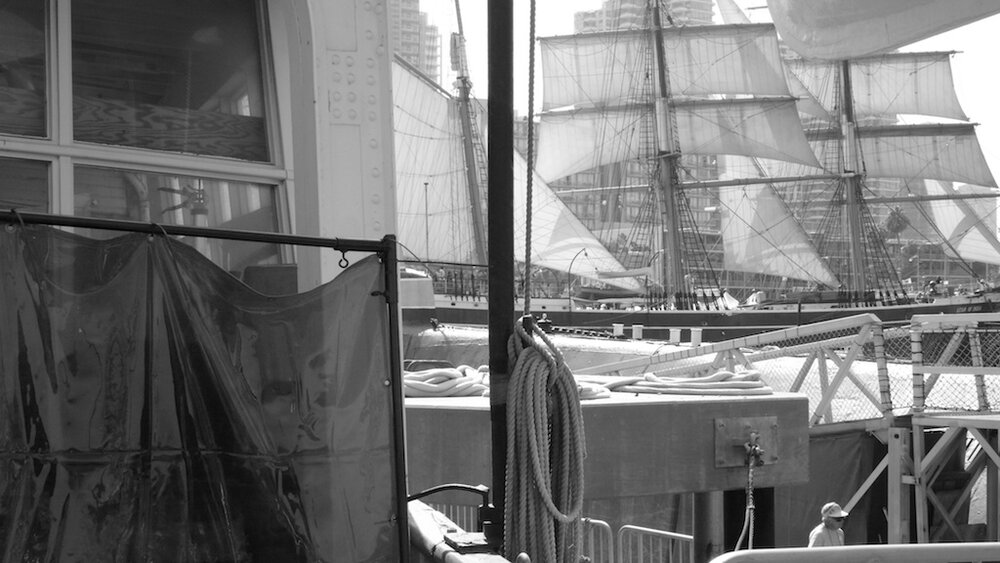
1988 | Pat White and the Last Match, Borrego Buttes

1988 | Pat White and the Last Match, Borrego Buttes

Over the years, Pat White and I had found special quiet spots, centers of good hiking, color and views. This little canyon became a favorite, red rock skirted with soft green algae-dyed gravel from the bottom of prehistoric Lake Cahuilla. We claimed a secluded site and were provisioned with arguably the best carne asada in the county, so Pat worked in the wind to get our little hibachi going. There was quite a struggle, then he asked me where I kept the extra matches. Poor prior planning forced my answer of “Nowhere!” But the last one caught, and we had a satisfying closing of a long desert day, watching where the light goes.

During my last term in the fall of 2003, I taught a new seminar, “Why People Photograph”. On the first evening, we came up with a prime list of forty-seven answers to the lead question. The course would go on to explore its likely traces and richer veins.

Over the sixteen weeks, I had scheduled ten visitors to present their work and talk about their concerns as artists and as people. Pat, a forthright and productive man in several media, was to lead a class in November; I knew he would bring us a strong portfolio and outlook. Pat had reminded me that all of his ceramic works had been destroyed in the 1989 Loma Prieta earthquake while he was preparing his final degree review at San Francisco State, so his coming talk would focus only on his photographs. As Pat’s class date approached, I checked in with him; he regretted to report that his photo archive, kept at his parents’ home for safekeeping, had been consumed just a few weeks prior, along with their house, in the horrific Cedar Fire. But he said that he had been working on a new series of drawings, and I was glad that we could pivot and add a mix to the media covered in the course.

Pat showed up right on time the next week, with only a handful of drawings, but a lot of resilience. The works he had set aside for his evening in class had just been ruined in a studio flood.


Official name of fire corrected July 2, 2020.

I am indebted to Robert Adams for his wonderful book, which provided the sensible title for my course.

30 | Frank the Circle Guy

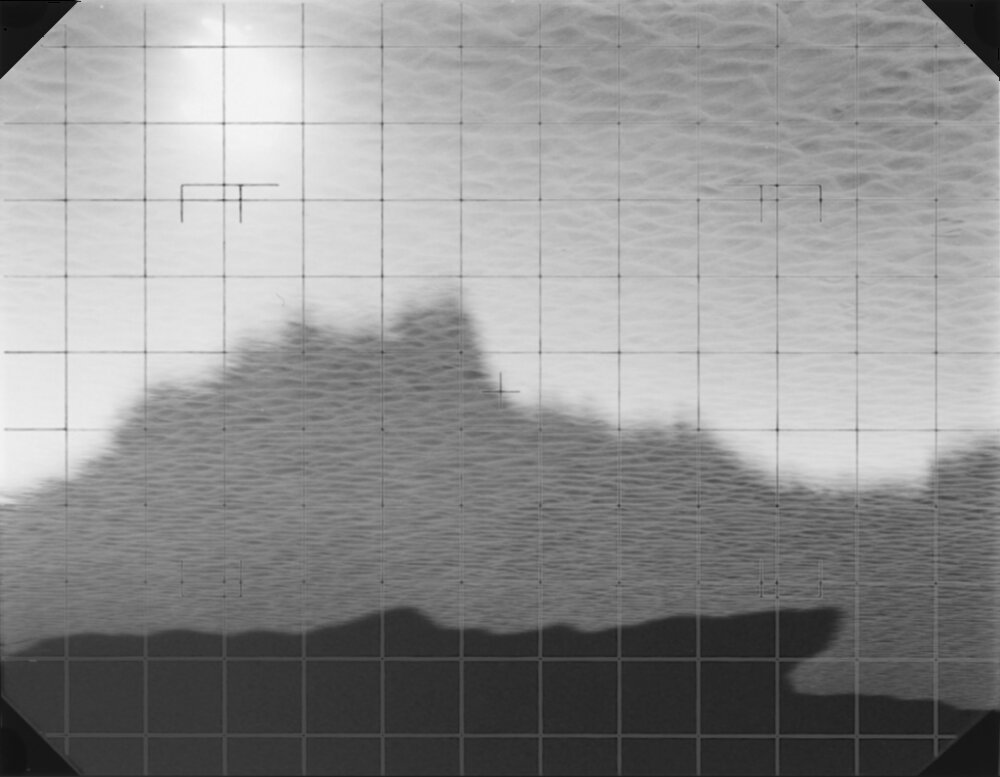
1995 | Panamint Valley, View SW

1995 | Panamint Valley, View SW

Some of the desert gang made a base camp for the spring holiday at Bow Willow, where there were nice small canyons feeding the alluvium sliding down towards the Salton Sea. Our small group included three regulars (just two photographers) and a few others from various disciplines outside the art world. One of the peripheral guys was Frank, who had apparently spent little time outdoors; he was strong but did not like to walk very far. As the sun was setting on our first day, the heat eased and the light softened for long and graceful exposures, but Frank became anxious and wanted to head back to camp immediately.

We didn't know – we thought perhaps he had become disoriented and he imagined that the affliction might extend to the whole group. To reassure him, we named every landmark and gave him the mileage and direction back to camp, raising our parallel arms and unanimously extending our forefingers.

Later, around the campfire, Frank didn't seem to get any of our jokes; our banter was gibberish to him and our slick desert puns fell flat on the sand at his feet. But we did learn that he was a remarkable guy – he worked in a highly technical machine shop where his job was to work up huge circular clamps from stainless steel, and these had to be perfect. Frank’s output was the inspector’s dream – every one a perfect circle.

Next morning, we walked north again across terrain gently flaring east. On a low rise, Pat White stopped to retie his boots. As we looked into the distance, I thought it was time for a quiz, so I asked Pat, a seasoned photographer and fine draftsman, which three things a good landscape picture should have. (I hadn’t thought of this ‘rule’ before, so I had no ready answer myself.) His agile mind seemed stuck. We walked on, but our movement, looking, and talking offered no clues, and Pat still came up blank.

Frank was ahead on the trail, so I caught up with him and posed my question. Instantly, he gave me, ”Something in the front, something the middle, and something in the back.”


29 | Inversions

1994 | Bandon, Oregon*

I walked with Lee Talner on the long flat beach near Bandon, endless at low tide. He was working with a hand camera, and I had my view camera on my traditional all-terrain Ries tripod.

My own habit is to go lightly, leaving the camera parked at rest, and then nose about. I work out a vantage point in advance and make a mark on the beach, or upend a pebble in the desert. Then I come back and plant my tripod right on that spot. I have been pretty good at picking out spots.

Lee, a radiologist, was expert in sorting out the ambiguities in X-ray films into working diagnoses to help his patients along, and he developed a good eye for the creative possibilities in his own photographs while faithfully collecting my work. We walked on the damp and delicious spread of sand, enjoying the soft footing and the thin pooling of stranded samples of the sea.

I remember that Lee asked, “I don’t know if I could use a view camera – with the image upside down on the groundglass, how do you learn to relate to it?”

I felt challenged to offer an example (Lee was taking a student’s role in my annual seven-day workshop). So I took another step or two, then set my tripod down right here* and made a small adjustment. I invited him to take a look under the cloth, knowing he would see a nice little landscape with a sun in the mackerel ‘sky’ above, a textured mountain ridge, and a nifty foreground shadow at the ‘bottom’. Lee ducked in, took a peek, and came out with a big grin, shaking his head.

It’s true that we became even better friends that day.


* Run your mouse over the picture to compare the two views.
** Touch-screen users can touch the picture to swap, then touch the white border to revert.

28 | About Time

1978 | Pacific Beach, San Diego

1978 | Pacific Beach, San Diego

It’s disheartening that our country seems equally divided in denying or embracing equality.
I reject the notion that inequality deserves equal time.


27 | Current

1976 | Flag Day, Denver

1976 | Flag Day, Denver

Driving through the Southwest with my pal Jamie, we worked up Phoenix, then Albuquerque, and drove on to Denver to visit two good friends. But first, we headed into the city center, windows down. In spite of the stiff wind, we picked up the faint, driving, syncopated beat of a full-percussion marching band in the Flag Day parade. Jumping to the opportunity, we ditched the car and split up, agreeing to meet later at the parade’s terminus at the State House, where Denver’s signature mile-high elevation is inscribed into the entry steps.

We reveled in the photographer’s dream of teeming streets, and I caught up with Jamie later in a scrum of journalists and other citizens surrounding the Governor before his speech. As Jamie closed in, someone asked him what newspaper he was working for. Uncredentialed but never at a loss, he countered, “How many papers are there in Denver?”


26 | One Bridge, Two Paths

1996 | Devil’s Gate, Shasta River, California

Congruent solutions…I have been wrestling with these two for years, and I still prefer the second one.

Radiologists, astronomers, and detectives use alternating flash-viewing methods to facilitate their diagnoses, discoveries, and forensics. The stacked presentation here is a good way for me to squeeze out a solution. I’ve placed my favorite in second position under this one, so that I have to do some work and dig down a layer to find it.

I think it might be one of those pictures which Garry Winogrand spoke of: “When you try to throw it away, it sticks to your hand.”


* Run your mouse over the picture to compare my two views.
** Touch-screen users can just touch the picture to swap, then touch the white border to revert.

25 | Lagging

1992 | Anza-Borrego Desert State Park, California

1992 | Anza-Borrego Desert State Park, California

I was out with a gaggle of my friend’s friends who had very different interests. Walking back from a pleasant oasis, which had featured falls and a deep-enough-to-cool-off pool, we found two routes back to the cars. I took the right fork, unknown to me. Some went ahead either way, others lagged behind, but I was unconcerned. Maintaining a downcanyon orientation would get no one lost.
I poked around with my view camera, knowing I could easily catch up with the multi-paced group, but I did not find anything worthy of a sheet of film. I gave up in the hard, high, light and headed for the trailhead and the cars, hoping for a quiet moment before all the others would get there. Somehow, I arrived last; they were all waiting for me!
I asked them to lounge around just a little longer while I set up for this picture, and they were generous and patient.
That’s a fine thing about the desert – no one is in a particular hurry; they are already there.


24 | Waiting

2020 | The Broad, Los Angeles

2020 | The Broad, Los Angeles


Waiting for my neighbor to open his back door, I look down and see, then photograph, a nascent potted ginkgo in quiet light. Or, waiting for my companion to finish working through a show in a museum, I easily shift from taking in art to making it. If I can wait without time, my curiosity always seems to rise.

If I have a camera with me, I am never alone.

23 | Color Question – D: Adverbs & Adjectives

2008 | San Diego

A friend has worked in writing seminars with Jack Grapes and describes him as a rigorous instructor by everyone’s account. Grapes threatens to charge his students $5.00 for each adverb that they use in their submissions. (If it’s not just the right verb, no number of modifiers will solve the problem.)

For me, color often adds adverbs and adjectives, taking over the conversation, explaining with too much information, adding no meaning.


* Run your mouse over the picture to swap color for monochrome.
** Touch-screen users can just touch the picture to swap, then touch again in the white space to revert.

***My friend’s anecdote corrected, June 24, 2020

22 | Color Question - C: Free Space

2004 | Sedona, Arizona


Maybe, when seen in color, this forest would have too many leaves. Maybe, color would occlude the illusionistic space.

In monochrome, the picture is full of light. But it’s not the light that shows the trees; it’s the trees that reveal the light.


* Run your mouse over the picture to swap monochrome for color.
** Touch-screen users can just touch the picture to swap, then touch again in the white space to revert.

(edited 2020-06-04)